
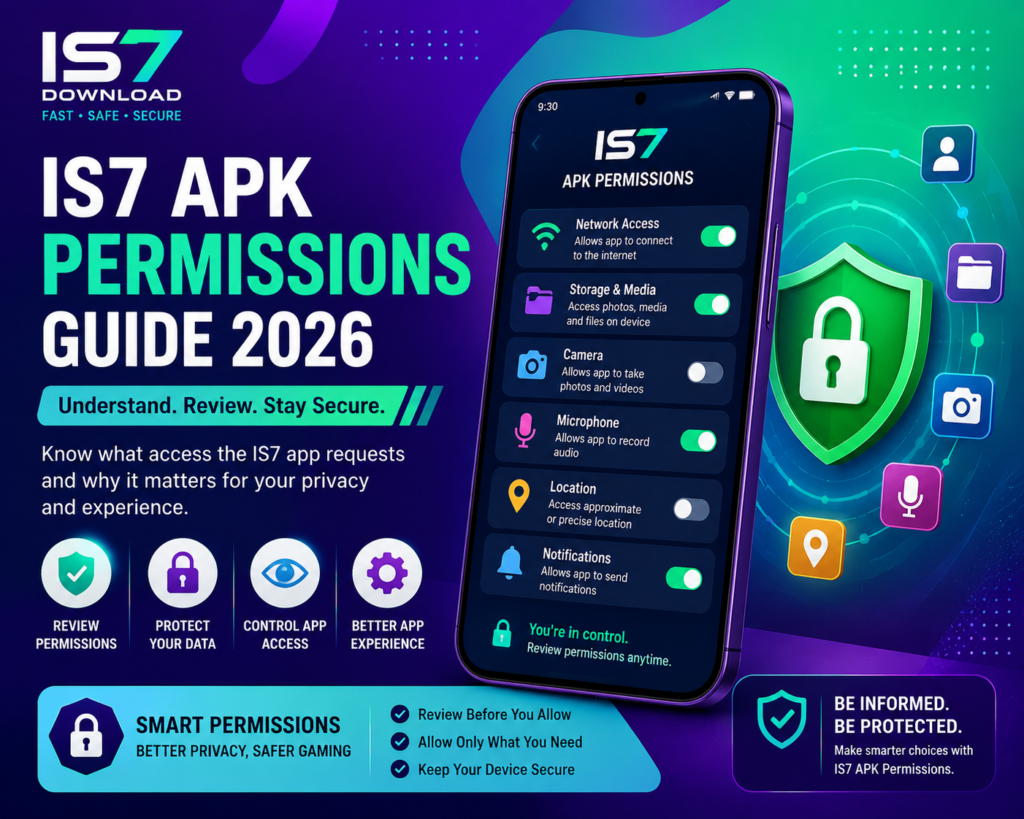
IS7 APK Permissions are requests that allow an application to access certain functions or resources on a device. Understanding these permissions before installation can help users make better decisions about app access and device privacy.
Different Android applications can request different permissions depending on their features. Some permissions may be necessary for specific functions, while others may depend on optional features.
This guide explains common permission categories, what they can mean, and how users can review app access safely in 2026.
What Are APK Permissions?
APK permissions are access requests associated with an Android application.
When an app requires access to a particular device function, Android may ask the user to approve that permission.
Depending on the application, permissions can relate to:
- Network access
- Notifications
- Storage or media
- Camera
- Microphone
- Location
- Device-related features
The exact permissions available can vary according to the application version and Android version.
Why Should You Check IS7 APK Permissions?
Reviewing permissions before using an application is a useful privacy habit.
It can help you understand:
- What device features an application may request
- Which permissions are necessary for specific features
- Whether optional access can be disabled
- Which permissions are currently active
- Whether an application’s access has changed after an update
Users should avoid approving permissions automatically without understanding what they are being asked to allow.
Common Permission Categories
Different permissions have different purposes.
Network Access
An online application generally needs network connectivity to communicate with its servers and load online content.
Network access can be required for:
- Connecting to online services
- Loading account information
- Synchronizing information
- Downloading required resources
- Accessing online features
Network connectivity is different from permissions such as camera or location access.
Notification Access
Some applications request permission to send notifications.
Notifications may be used for:
- Account alerts
- Important platform messages
- Feature updates
- Activity reminders
- Other application information
If you do not want notifications, Android settings generally allow you to manage notification access.
Storage and Media Access
Depending on the Android version and application design, an app may request access related to files or media.
This can be relevant when an application needs to:
- Save files
- Read selected media
- Store application resources
- Manage downloaded content
Modern Android versions provide more granular controls than older versions, so the exact behavior can vary by device.
Camera Permission
Some applications may request camera access for specific features.
If a feature does not require camera functionality, users should consider whether the permission is actually necessary.
Android provides controls that allow users to review and manage camera access.
If you see a camera request unexpectedly, check the application’s stated functionality before granting access.
Microphone Permission
Microphone access allows an application to use the device microphone when permission has been granted.
This type of permission may be relevant to applications that provide:
- Voice features
- Audio recording
- Communication tools
- Other microphone-based functions
If microphone access is not required for a feature you use, review whether it should remain enabled.
Location Permission
Location access can provide an application with information about the device’s location.
Location permissions can have different levels depending on the Android version and device settings.
Before granting location access, consider whether the application actually needs location information for a feature you intend to use.
How to Review IS7 APK Permissions on Android
Android provides built-in settings for reviewing application permissions.
The exact menu names can differ depending on your device manufacturer and Android version.
A general process is:
- Open Settings.
- Select Apps or Applications.
- Find the relevant IS7 application.
- Open Permissions.
- Review the permissions currently allowed.
- Change permissions where appropriate.
Always check the permission description before disabling access because some application features may stop working if a required permission is removed.
How to Decide Whether a Permission Is Necessary
Before approving a permission, ask a simple question:
Does this feature logically require this access?
For example, a camera-based feature may reasonably require camera access.
However, if a permission appears unrelated to the feature you are using, review the application’s information and Android’s permission explanation before approving it.
This does not automatically mean the application is unsafe. It simply means the requested access deserves closer attention.
Permission Requests After an Update
An application update can introduce new functionality.
As a result, a newer version may request permissions that were not required by an earlier version.
When this happens:
- Review the new permission.
- Identify which feature requires it.
- Check the application’s current information.
- Decide whether you want to enable it.
- Keep unnecessary permissions disabled when appropriate.
Users should periodically review permissions instead of assuming that they never change.
How to Manage Unused Permissions
If an application has permissions that you no longer want to provide, Android may allow you to modify them through its app settings.
Before changing a permission, understand its purpose.
Disabling access can sometimes affect:
- Notifications
- Media-related functions
- Device features
- Account functionality
- Other application services
If a feature stops working after a permission is disabled, you can review the relevant setting and determine whether access needs to be restored.
APK Permissions and Privacy
Permissions are only one part of application privacy.
Users should also consider:
- Where the APK came from
- Whether the source is trustworthy
- Application updates
- Account security
- Device security
- Privacy policies
- Requested permissions
A permission review cannot guarantee that an application is safe. It is one useful step in a broader security process.
Download APK Files Carefully
The source of an APK file matters.
Users should avoid downloading application files from unknown websites, suspicious advertisements, or unverified file-sharing pages.
Before installing an APK, consider:
- Whether the source is official or trusted
- Whether the file matches the expected application
- Whether the version information is clear
- Whether unexpected permissions are requested
- Whether Android displays a security warning
Avoid disabling device security protections simply to install an unknown application.
Check for Suspicious Permission Requests
Unexpected permission requests deserve additional attention.
Examples may include an application requesting access that appears unrelated to its main functionality.
If you are unsure about a permission:
- Do not approve it immediately.
- Check what the permission provides.
- Review the application’s documented features.
- Check Android’s permission information.
- Consider using an alternative trusted source or application if concerns remain.
Being cautious is preferable to granting unnecessary access.
IS7 APK Permissions on Different Android Versions
Permission management can change between Android versions.
Newer versions may provide users with more detailed controls over:
- Location
- Notifications
- Photos and media
- Camera
- Microphone
- Other sensitive device functions
Therefore, the permission screen on one Android device may not look exactly the same as another.
Always follow the permission options displayed by your own device.
What Happens If You Deny a Permission?
Denying a permission does not necessarily prevent an application from working completely.
The result depends on what the permission is used for.
For example, if a permission supports an optional feature, only that feature may be affected.
If a permission is required for a core function, that function may not work until the permission is granted.
If something stops working after denying access, review the relevant permission and application settings.
Permission Management Checklist
Before using an APK, consider this checklist:
- ✓ Verify the APK source
- ✓ Review requested permissions
- ✓ Understand sensitive permissions
- ✓ Check Android security warnings
- ✓ Keep your device updated
- ✓ Review permissions after major updates
- ✓ Disable unnecessary access when appropriate
- ✓ Avoid unknown modified APK files
- ✓ Never share account credentials
- ✓ Use trusted support resources
These steps can help improve your overall device security habits.
Common IS7 APK Permission Questions
What are IS7 APK Permissions?
They are access requests that allow the application to use certain device functions or resources when approved by the user.
Should I allow every permission?
No. Review each permission and consider whether it is necessary for the feature you want to use.
Can I change app permissions later?
On supported Android devices, permissions can generally be reviewed and changed through the application’s settings.
Why might a new APK version request another permission?
A new version may introduce a feature that requires additional device access. Review the reason for the permission before approving it.
Will denying a permission break the application?
It depends on the permission. Optional features may stop working while core functions may require specific access.
Are APK permissions a guarantee that an app is safe?
No. Permission review is only one part of application security. The source of the APK, application behavior, updates, and device security also matter.
Should I install an APK that requests many sensitive permissions?
Be cautious. Review whether those permissions are relevant to the application’s advertised functionality and use a trusted source whenever possible.
How can I check permissions on Android?
Open your device settings, find the application under the Apps section, and look for its Permissions settings. Menu names can vary between Android versions and manufacturers.
Final Thoughts
Understanding IS7 APK Permissions is a useful part of maintaining better control over your Android device.
Before installing or updating an application, review its source, understand requested access, and avoid granting permissions that do not appear necessary for the features you intend to use.
Permission settings can also change after application updates, so reviewing them periodically is a good security habit.
Always use trusted sources for application files and protect your account credentials while using online platforms.