
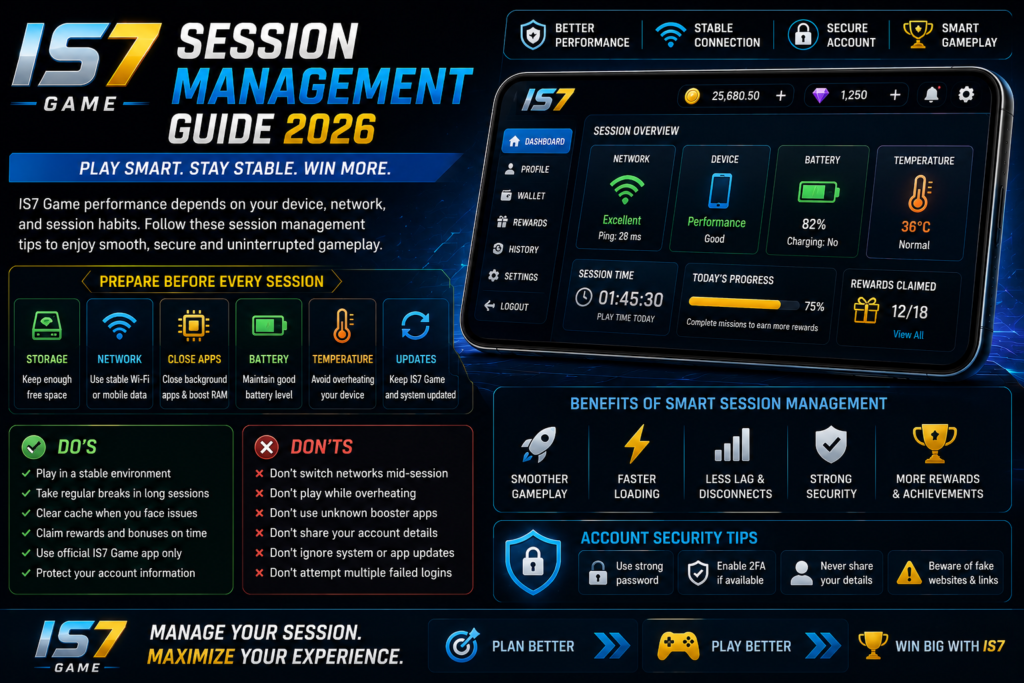
Long gaming sessions can be affected by network changes, background applications, device temperature, memory usage, and unexpected interruptions. Understanding IS7 Game session management can help users maintain a more consistent experience while reducing unnecessary performance problems.
Rather than focusing only on device specifications, experienced users should consider how their phone, connection, and application activity work together during each session.
Why Session Management Matters in IS7
Mobile gaming performance can change throughout a session. A game may initially run smoothly but become slower after extended use.
Several factors can contribute to this change, including available memory, battery settings, background processes, network stability, and device temperature.
Managing these factors can help maintain more predictable performance.
Prepare Your Device Before Opening IS7 Game
A few checks before starting can prevent problems later.
Before opening IS7 Game, consider checking:
- Available device storage
- Current battery level
- Wi-Fi or mobile network stability
- Active background applications
- Pending system updates
- Device temperature
You do not need to change every setting each time. Instead, focus on anything that could interfere with the upcoming session.
Manage Background Applications
Modern smartphones can keep several applications active simultaneously. While convenient, these apps may continue consuming memory, processor resources, or network bandwidth.
Video streaming, cloud synchronization, social media, and large downloads can have a noticeable impact.
Closing unnecessary applications before using IS7 may free resources for the active session.
Maintain a Stable Network Connection
Network consistency is often more important than maximum advertised speed.
A connection that repeatedly switches between strong and weak signals can cause interruptions. Therefore, users should choose the most stable available connection.
If using Wi-Fi, staying within a reasonable distance of the router can help. Meanwhile, mobile data users should check signal quality before starting a longer session.
Avoid Switching Networks Mid-Session
Moving between Wi-Fi and mobile data during active use may temporarily interrupt connectivity.
Although modern devices handle network switching automatically, the transition is not always seamless.
When possible, choose a reliable connection before opening IS7 Game and maintain it throughout the session.
This can reduce unexpected connection interruptions.
Monitor Device Temperature
Smartphones generate heat when the processor, graphics hardware, display, and network connection remain active for extended periods.
When temperatures rise significantly, some devices automatically reduce performance to protect internal components.
To manage heat:
- Avoid direct sunlight.
- Do not cover the device unnecessarily.
- Reduce unnecessary background activity.
- Consider avoiding intensive use while charging.
- Give the phone time to cool if it becomes unusually hot.
Temperature management can support more consistent performance.
Check Battery Optimization Settings
Battery-saving features can sometimes limit application activity.
When power-saving mode is active, the device may reduce processor performance, restrict background network access, or lower display performance.
If IS7 becomes noticeably slower when your battery level drops, check whether battery-saving settings have activated automatically.
However, avoid disabling important device protections unnecessarily.
Keep Enough Free Storage
Storage affects more than the ability to install applications.
Android devices also need free space for temporary files, updates, cached information, and normal system processes.
If your storage is almost full, remove files you no longer need.
Large videos, duplicate downloads, old installation packages, and unused apps are common places to start.
Understand Cache and Temporary Data
IS7 may use cached information to reduce repeated loading.
Therefore, frequently deleting all temporary files is not always beneficial. Clearing cache should generally be considered when you experience persistent loading problems or when temporary data appears corrupted.
Avoid clearing complete application data unless necessary because doing so may remove locally stored settings or require you to sign in again.
Keep IS7 Game Updated
Application updates can include compatibility improvements, interface changes, performance optimizations, and bug fixes.
Using an outdated version may result in issues that have already been addressed in a newer release.
Check periodically for updates and review available version information before installing major changes.
Your device operating system should also remain reasonably current when supported.
Protect Your IS7 Account During Sessions
Session management also involves account security.
Use a strong password and avoid sharing account credentials with other people. If the platform provides additional security or verification options, consider enabling them.
Users should also avoid entering login information into unknown third-party pages that imitate the IS7 interface.
Account security is particularly important on shared or unfamiliar devices.
Avoid Repeated Login Attempts
Repeatedly entering incorrect credentials may trigger temporary security restrictions on some platforms.
If login information is not working, verify your credentials carefully before attempting multiple times.
Also check whether your internet connection is stable and whether the application is functioning normally.
A methodical approach is better than repeatedly attempting to sign in.
Troubleshoot Performance One Change at a Time
When IS7 Game develops a performance problem, changing several device settings simultaneously can make troubleshooting more difficult.
Instead, identify the symptoms first.
For example:
- Slow loading may relate to connectivity or storage.
- Increasing lag over time may relate to device temperature.
- Frequent disconnections may indicate network instability.
- Problems after an update may require application-specific troubleshooting.
Test one solution before moving to the next.
Build a Consistent IS7 Session Routine
Experienced users can create a short routine before longer sessions.
Check your connection, close unnecessary apps, confirm sufficient battery and storage, and make sure the device is not already overheating.
Afterward, monitor performance rather than continuously changing settings.
This approach creates a more consistent environment and makes unusual problems easier to identify.
Why Optimization Is Better Than Booster Apps
Third-party “game booster” applications often promise dramatic improvements.
However, many simply close background apps or modify basic settings already available within Android. Some may also request unnecessary permissions.
Using built-in device optimization features is generally a more controlled approach.
IS7 users should focus on stable connectivity, storage management, temperature control, updates, and sensible device settings instead.
Conclusion
A smooth IS7 Game experience depends on more than processing power. Network stability, available memory, storage, battery settings, device temperature, updates, and account security can all influence longer sessions.
By preparing the device before playing and troubleshooting individual problems systematically, IS7 users can maintain a more stable and consistent gaming environment without relying on unnecessary optimization tools.